
Sin in Us (JICC)
Sermon Notes
Key Passage: Romans 7:13-25
Heidelberg Catechism (1563): Lord’s Day 1
Q. What is your only comfort
in life and in death?
A. That I am not my own,
but belong—body and soul,
in life and in death—to my faithful Savior, Jesus Christ.
He has fully paid for all my sins with his precious blood,
and has set me free from the tyranny of the devil.
He also watches over me in such a way that not a hair can fall from my head
without the will of my Father in heaven; in fact, all things must work together for my salvation.
Because I belong to him,Christ, by his Holy Spirit,
assures me of eternal life and makes me wholeheartedly willing and ready
from now on to live for him.
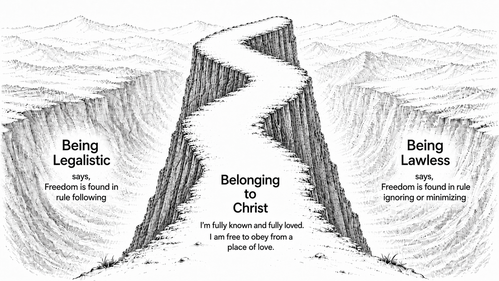
- Being Lawless says,
- “Everyone fails sometimes.”
- Freedom is found in rule ignoring or minimizing
- Being Legalistic says,
- “Obey so God will accept you.”
- Law is duty. It’s earning.
- Freedom is found in rule following
- Belonging to Christ “My sin is completely known to me and to God. And yet God has accepted me in Christ; therefore, I am free to obey from a place of love.”
Heidelberg Catechism (1563): Lord’s Day 1
Q. What is your only comfort
in life and in death?
A. That I am not my own,
but belong—body and soul,
in life and in death—to my faithful Savior, Jesus Christ.
He has fully paid for all my sins with his precious blood,
and has set me free from the tyranny of the devil.
He also watches over me in such a way that not a hair can fall from my head
without the will of my Father in heaven; in fact, all things must work together for my salvation.
Because I belong to him,Christ, by his Holy Spirit,
assures me of eternal life and makes me wholeheartedly willing and ready
from now on to live for him.
What would cause you to live with self-contempt?
1. I Live Before the Wrong Eyes
“My dear friends, from the devil's standpoint there is not the slightest difference between being puffed up with pride in yourself or spending the whole of your time condemning yourself. Either way the devil is very well-pleased. Any concentration upon self in any shape or form is of the devil.” ― Martyn Lloyd-Jones
2. I Listen to the Wrong Voice
3. I Stand Next to the Wrong Standard
True conviction comes from loving God’s law and grieving what violates it. In order to avoid the feeling of guilt, we reframe it.
Reframing our sin:
I’m not gossiping; I’m just sharing a prayer request.
I’m not complaining; I’m just being honest.
I’m not anxious; I’m just a planner.
I’m not judgmental; I’m just discerning.
I’m not bitter; I just need time to process.
Sins of commission - “I do the very thing I hate”)
But also sins of omission - “I do not do what I want”
I’m not greedy; I’m just careful with money.
I’m not refusing to serve; I’m just protecting my margin. (boundaries)
I’m not avoiding evangelism; I’m just waiting for the right moment.
I’m not neglecting hospitality; I just need my home to be in order first.
1. I Live Before the Wrong Eyes
“My dear friends, from the devil's standpoint there is not the slightest difference between being puffed up with pride in yourself or spending the whole of your time condemning yourself. Either way the devil is very well-pleased. Any concentration upon self in any shape or form is of the devil.” ― Martyn Lloyd-Jones
2. I Listen to the Wrong Voice
3. I Stand Next to the Wrong Standard
True conviction comes from loving God’s law and grieving what violates it. In order to avoid the feeling of guilt, we reframe it.
Reframing our sin:
I’m not gossiping; I’m just sharing a prayer request.
I’m not complaining; I’m just being honest.
I’m not anxious; I’m just a planner.
I’m not judgmental; I’m just discerning.
I’m not bitter; I just need time to process.
Sins of commission - “I do the very thing I hate”)
But also sins of omission - “I do not do what I want”
I’m not greedy; I’m just careful with money.
I’m not refusing to serve; I’m just protecting my margin. (boundaries)
I’m not avoiding evangelism; I’m just waiting for the right moment.
I’m not neglecting hospitality; I just need my home to be in order first.
4. I Look to the Wrong Savior
Romans 7:24-25 (New Living Translation)
24 Oh, what a miserable person I am! Who will free me from this life that is dominated by sin and death? 25 Thank God! The answer is in Jesus Christ our Lord. So you see how it is: In my mind I really want to obey God’s law, but because of my sinful nature I am a slave to sin.
Romans 7:24-25 (New Living Translation)
24 Oh, what a miserable person I am! Who will free me from this life that is dominated by sin and death? 25 Thank God! The answer is in Jesus Christ our Lord. So you see how it is: In my mind I really want to obey God’s law, but because of my sinful nature I am a slave to sin.
Resources
Weekly Reading
Monday: Numbers 1, John 5
Tuesday: Numbers 2
Wednesday: John 6
Thursday: Numbers 3
Friday: Numbers 4:1-20, John 7
Saturday: Psalm 60-63
Sunday: 1 Chronicles 28-29, 2 Chronicles 1-9
Tuesday: Numbers 2
Wednesday: John 6
Thursday: Numbers 3
Friday: Numbers 4:1-20, John 7
Saturday: Psalm 60-63
Sunday: 1 Chronicles 28-29, 2 Chronicles 1-9
Discussion Questions
3DQ - 3 discipleship questions to ask each other: What is God saying to you? What are you going to do about it? How can I help?
"I do not do what I want, but I do the very thing I hate." (7:15) Where do you most often feel the frustration of being a Christian who still struggles with sin? How can this verse help us be honest without despairing?
One of the ways stated that we fall back into self-criticism is that we “live before the wrong eyes.” When you think about your sin, whose opinion weighs most heavily on you: God’s, your own, or other people’s? How do both pride and self-condemnation keep our eyes fixed on self instead of on Christ? (see: 1 Corinthians 4:3–5 — Paul entrusts final judgment to the Lord)
What sins do you tend to rename so they sound less serious? For example: “I’m not gossiping; I’m just sharing a concern,” or “I’m not avoiding evangelism; I’m waiting for the right moment.” What would it sound like to name that sin honestly before God? (Psalm 139:23–24 — “Search me, O God… see if there be any grievous way in me.”)
How does recognizing that there is a war going on inside of us help us to be sober minded when it comes to not putting ourselves in places of temptation? (7:22-23) Think about examples in general (ie. a recovering alcoholic doesn’t go to a bar to hang out with friends, etc.). Now consider your own life. Is there any step you should take to “wage war” in your own struggle against sin?
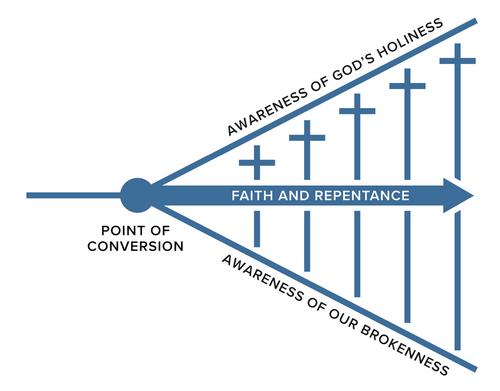
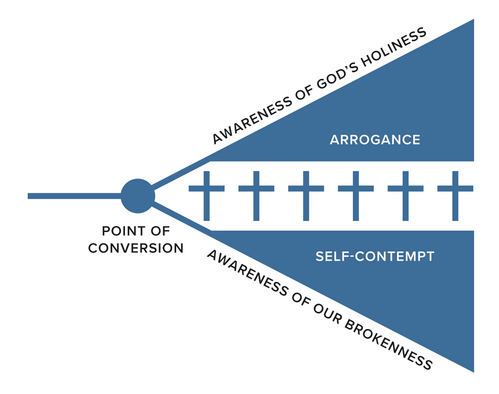
Re-read Romans 7:24–25 and Psalm 51 and look at the sanctification graphs above. When you feel guilt or shame, do you tend to punish yourself, excuse yourself, improve yourself, or run to Christ? How does the gospel free us from trying to be our own sin-bearer?
"I do not do what I want, but I do the very thing I hate." (7:15) Where do you most often feel the frustration of being a Christian who still struggles with sin? How can this verse help us be honest without despairing?
One of the ways stated that we fall back into self-criticism is that we “live before the wrong eyes.” When you think about your sin, whose opinion weighs most heavily on you: God’s, your own, or other people’s? How do both pride and self-condemnation keep our eyes fixed on self instead of on Christ? (see: 1 Corinthians 4:3–5 — Paul entrusts final judgment to the Lord)
What sins do you tend to rename so they sound less serious? For example: “I’m not gossiping; I’m just sharing a concern,” or “I’m not avoiding evangelism; I’m waiting for the right moment.” What would it sound like to name that sin honestly before God? (Psalm 139:23–24 — “Search me, O God… see if there be any grievous way in me.”)
How does recognizing that there is a war going on inside of us help us to be sober minded when it comes to not putting ourselves in places of temptation? (7:22-23) Think about examples in general (ie. a recovering alcoholic doesn’t go to a bar to hang out with friends, etc.). Now consider your own life. Is there any step you should take to “wage war” in your own struggle against sin?
Re-read Romans 7:24–25 and Psalm 51 and look at the sanctification graphs above. When you feel guilt or shame, do you tend to punish yourself, excuse yourself, improve yourself, or run to Christ? How does the gospel free us from trying to be our own sin-bearer?
No Comments